Carnaby Street in the sixties: John Stephen and the mod shops
A shabby Soho backstreet, a Glasgow-born tailor's assistant and a Time magazine cover story: how Carnaby Street became the sound and look of the sixties.
By Only Soho Editorial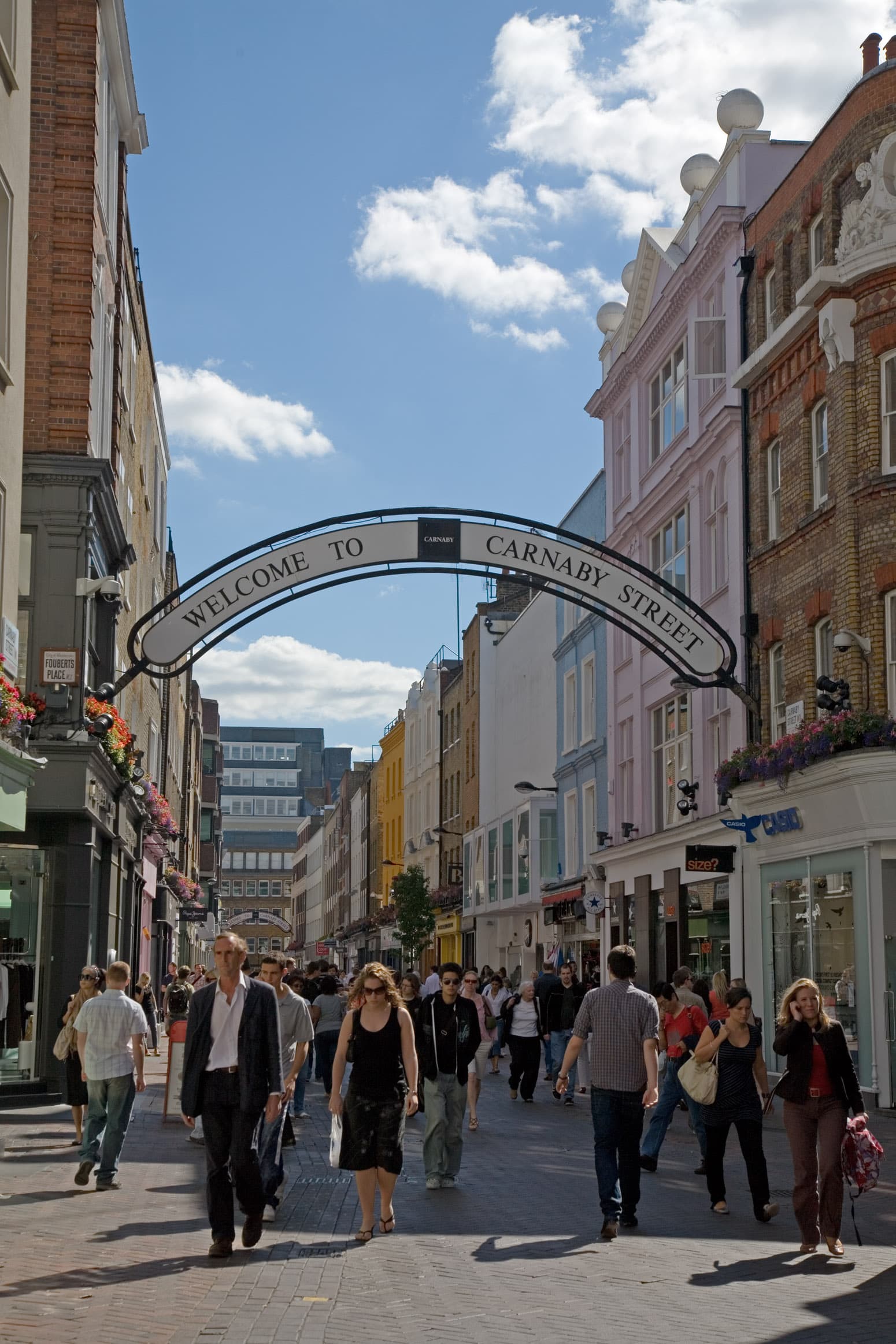
Walk up Carnaby Street today and it is easy to forget that it was once a shabby little Soho backstreet. In the early 1950s it was rag-trade sweatshops, locksmiths and tailors, with a Central Electricity Board depot taking up much of one side. Within fifteen years it was the street the world pointed at when it said Swinging London. This is how that happened.
A street with a seventeenth century name
The street takes its name from Karnaby House, built in 1683 by the bricklayer Richard Tyler on the east side. The street itself was laid out in the late seventeenth century. It runs between Beak Street at the south end and Great Marlborough Street at the north, and it is now pedestrianised. Sources: Survey of London and Wikipedia.
Before Carnaby: Vince on Newburgh Street
The story starts one street over. In 1954 a man named Green opened a small boutique called Vince in Newburgh Street. It served the gay bodybuilding crowd around the Marshall Street baths, and it sold tight trousers to bodybuilders and theatrical customers. To bring in custom, Green hired good-looking young men as sales assistants. One of them was a Glasgow-born lad called John Stephen.
John Stephen, the King of Carnaby Street
Stephen moved from Glasgow to London in 1952, aged 18, and first worked in the military department at Moss Bros in Covent Garden. After his spell at Vince he went out on his own. Wikipedia dates his first shop to Beak Street in 1956, with a fire forcing a move in 1957 to 5 Carnaby Street, then an undistinguished parade behind the London Palladium. The shop was called His Clothes. (Sources differ on the exact years, so call it the late 1950s and you will be safe.)
What he sold was new: tight-fitting, brightly coloured clothes for young men, at prices a young man could manage. The shop drew customers from theatrical, artistic and countercultural circles. Hipster trousers, floral shirts, velvet jackets, mini kilts and kaftans followed, according to Fashion United. Wikipedia calls him the first individual to identify and sell to the young menswear mass market that emerged in the late fifties and early sixties. The text on his Westminster green plaque goes further, crediting him as a pioneer of fast-turnover, disposable fashion.
He kept opening. By 1967 he ran a chain of 15 shops on the street, with names that now read like a period playlist: His Clothes, Domino Male, Mod Male, Male W1 and Trecamp, a boutique that also sold women's clothes. The press called him "the £1m Mod" and "the King of Carnaby Street". In 1967 he said, "Carnaby is my creation."
The rivals
Stephen was not alone, and he did not own everything. Lord John, at 43 Carnaby Street, was opened by the three Gold brothers, Warren, Harold and David, in 1963 or 1964 depending on the source. Its name led to litigation with Stephen, and many books wrongly say he owned it. The customers were the music crowd: the Small Faces had an account there, the Who bought stage gear and Brian Jones of the Rolling Stones was a customer. In 1966 the Gold brothers hired the Small Faces and the Yardbirds to play outside the store, according to the London Museum. A plaque to Lord John was later unveiled at number 43.
Mates, run by Irvine Sellar, opened in 1965 and sold men's and women's clothes on one floor with no partition, which was radical enough at the time. Musicians bought kaftan-style jackets there. Gear, Take Six and the tailor Dougie Millings turn up as contemporaries, and Lady Jane, the women's boutique run by Henry Moss from around 1965, was inspired by the boom. Foale and Tuffin were at Marlborough Court, just off the street.
The bands next door
The music was a short walk away. The Small Faces, the Who and the Rolling Stones worked at the Marquee Club on Wardour Street, shopped on Carnaby and socialised there. A fan history site records that on 7 June 1965 the Small Faces met their manager Don Arden at his offices at 52 to 55 Carnaby Street, and that their deal included accounts at all the major Carnaby shops. Hard to think of a better contract.
Time magazine makes it official
On 15 April 1966 Time ran a cover story called "London: The Swinging City", written by Piri Halasz, which cemented the capital's cool image, as History puts it. Its verdict on Carnaby: "Perhaps nothing illustrates the new swinging London better than narrow, three-block-long Carnaby Street." It described a street crammed with "gear" boutiques where girls and boys buy each other's clothes. After that, the tourists came.
After the sixties
Carnaby was pedestrianised in 1973, and a "Carnaby Street welcomes the World" sign went up. Punk arrived, and the Sex Pistols were photographed there in 1976. The 2 Tone and mod revivals brought some clothing trade back in 1979, but through the eighties and nineties the street lost its aura, choked by souvenir shops and downmarket clothes stores. The V&A acquired Stephen's archive in 1975, according to one retro fashion blog. He died in 2004.
Carnaby now
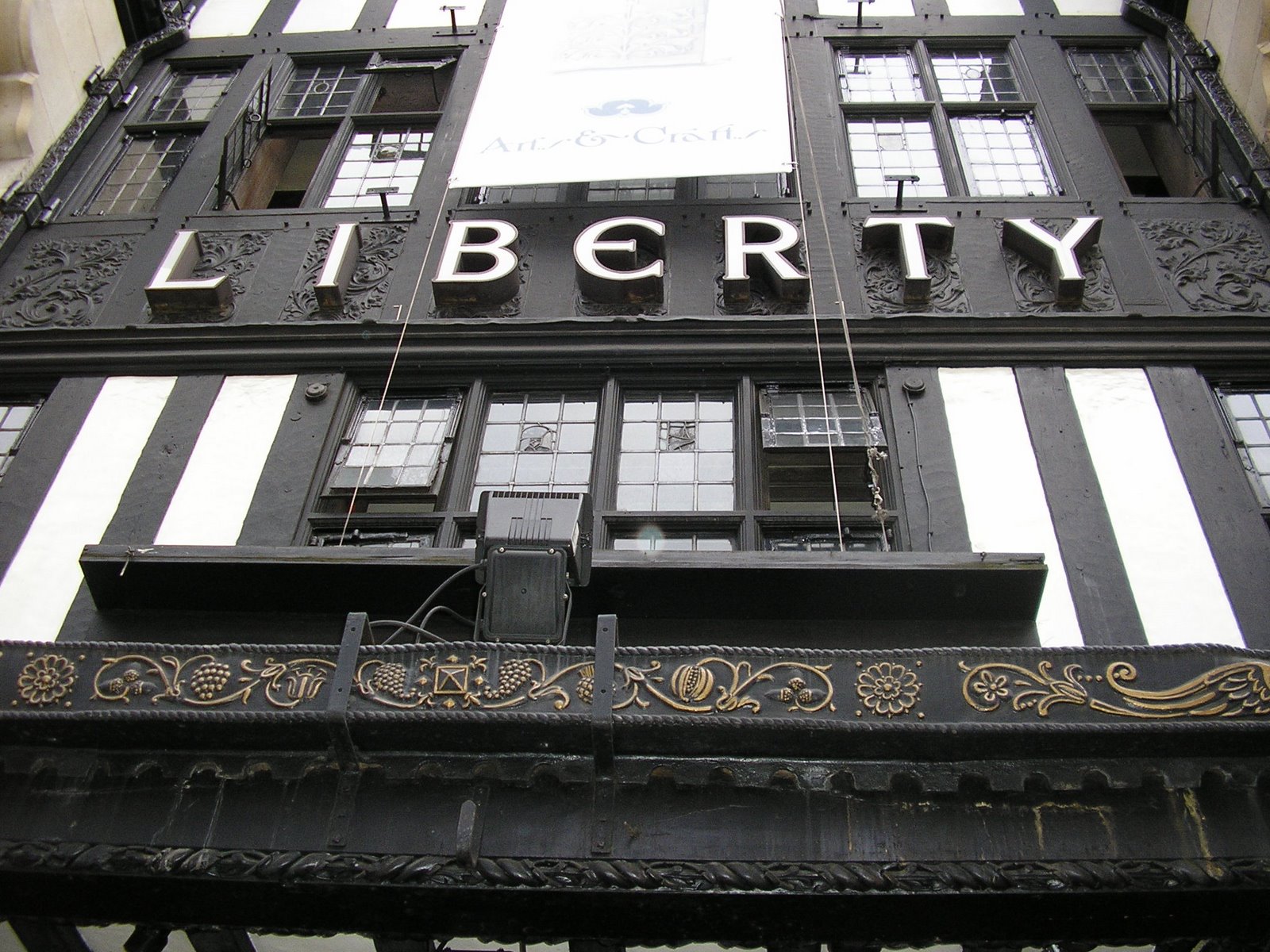
Today the street is run as a single managed estate with Kingly Court behind it, mostly restaurants across three floors. Shaftesbury Capital owns the estate and is investing in the streetscape. The mod tradition survives in Marlborough Court at Sherry's London, and Liberty has an entrance on Carnaby, though its main store is on Great Marlborough Street.
Look for the Westminster green plaque to John Stephen at 1 Carnaby Street, at the Beak Street end, and for the Lord John plaque at 43. The Shakespeare's Head pub still stands at the corner of Carnaby Street and Foubert's Place. Go first thing, before the crowds, start at the Beak Street end and read the plaques as you walk north.