How Chinatown came to Gerrard Street
From the docks of Limehouse to a pedestrianised Soho street, with a paifang gate and two stone lions to prove it.
By Only Soho Editorial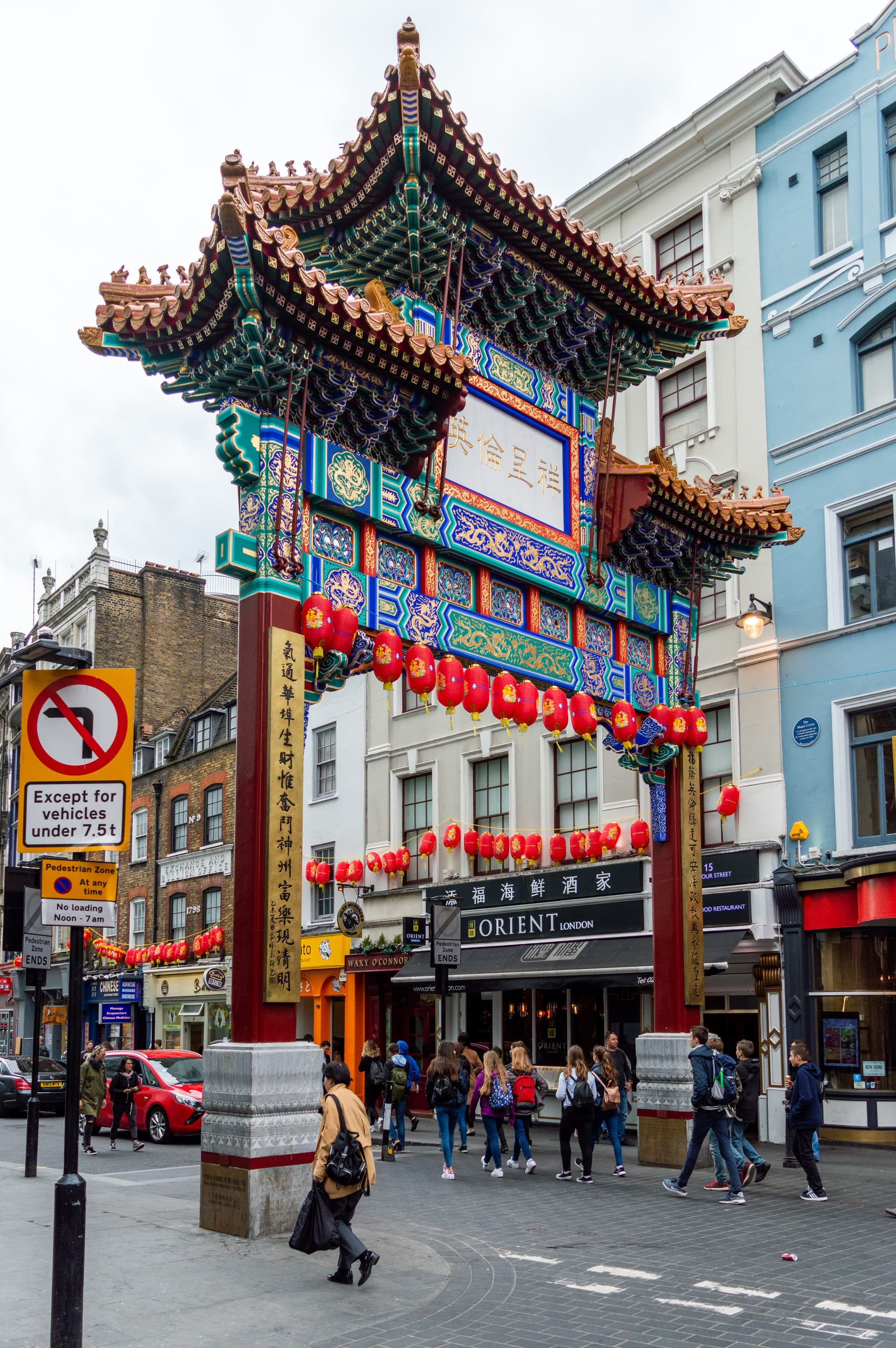
Chinatown feels as if it has always been here, all red lanterns and roast duck in the window. It has not. The story starts a few miles east, among the docks, and Gerrard Street only becomes its address in the decades after the Second World War.
Limehouse, the first Chinatown
Chinese sailors discharged from British shipping companies settled in Limehouse in the East End, and it became the first area known as London's Chinatown. By the mid-1880s it was the centre of Chinese British life. The London Museum describes two clusters: people from Shanghai around Pennyfields, Amoy Place and Ming Street, and people from southern China around Limehouse Causeway and Gill Street. Residents rented rooms in crowded terraced houses among factories and dockyards.
The community was small, and it was the target of sensational press anxiety, the so-called Limehouse myths. Its businesses depended on shipping, which helped them grow in the First World War and hastened their decline in the 1930s. Limehouse Causeway was widened in 1934, with alleys, Chinese businesses and lodging houses demolished. Slum clearance and Blitz bombing finished the job, and many families moved to the suburbs or the West End. Little survives today beyond street names: Ming Street, Pekin Street and Canton Street.
Gerrard Street before Chinatown
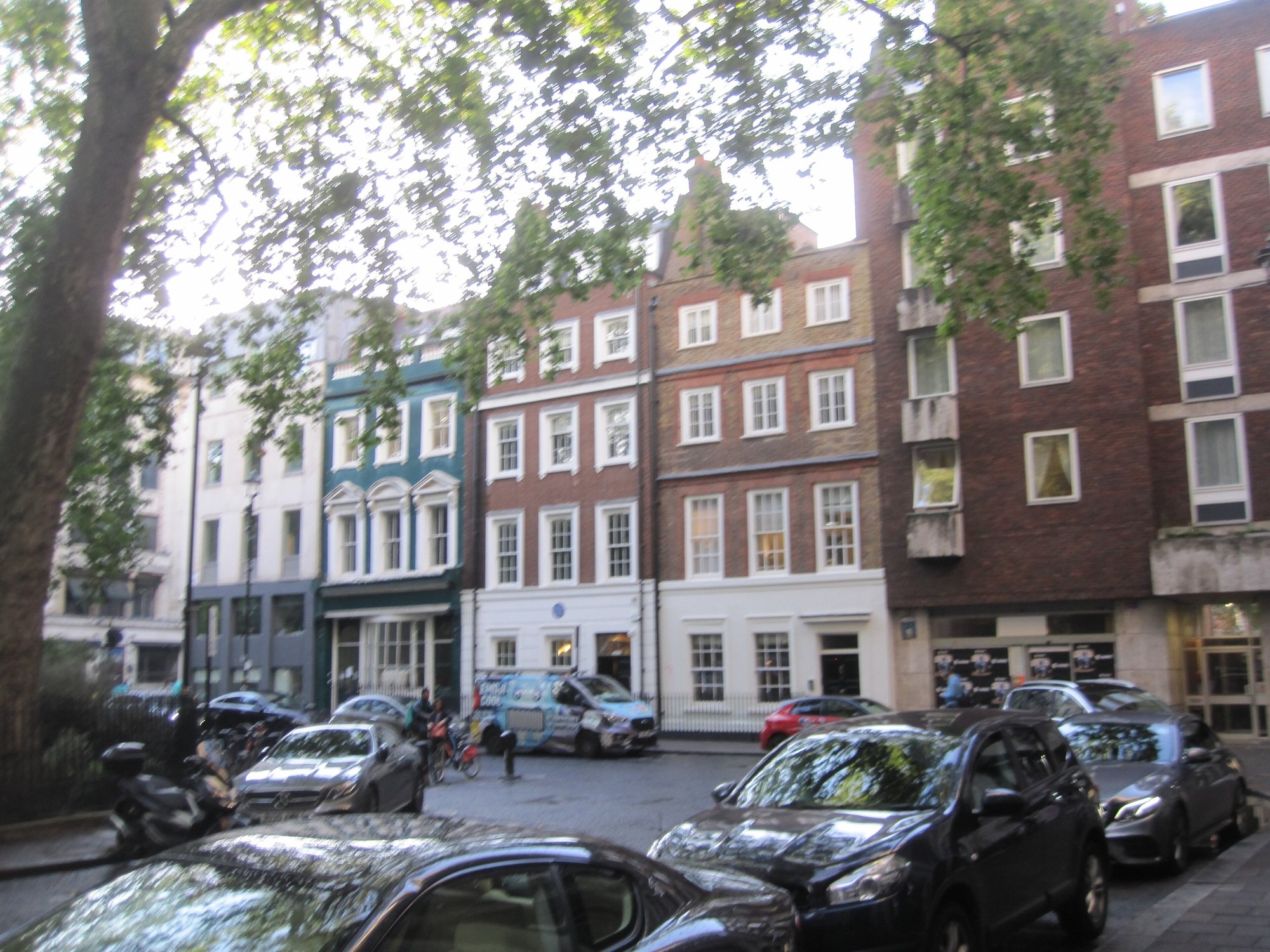
Gerrard Street was laid out between 1677 and 1685 and named after Charles Gerard, 1st Earl of Macclesfield, who owned the land. By the mid-18th century it was better known for coffee houses and taverns, and John Dryden and Edmund Burke both lived here. Burke is remembered with an RSA blue plaque at 37 Gerrard Street.
By the 1950s it was a run-down stretch of Soho. Wikipedia lists a Post Office, a master baker, the Boulogne restaurant, an Indian restaurant, a French coffee house and various brothels. At numbers 4 and 5 the photographer George Harrison Marks and Pamela Green ran their glamour studio. The Tailor & Cutter House at 43 and 44 did not close until around 1974.
The move to Soho
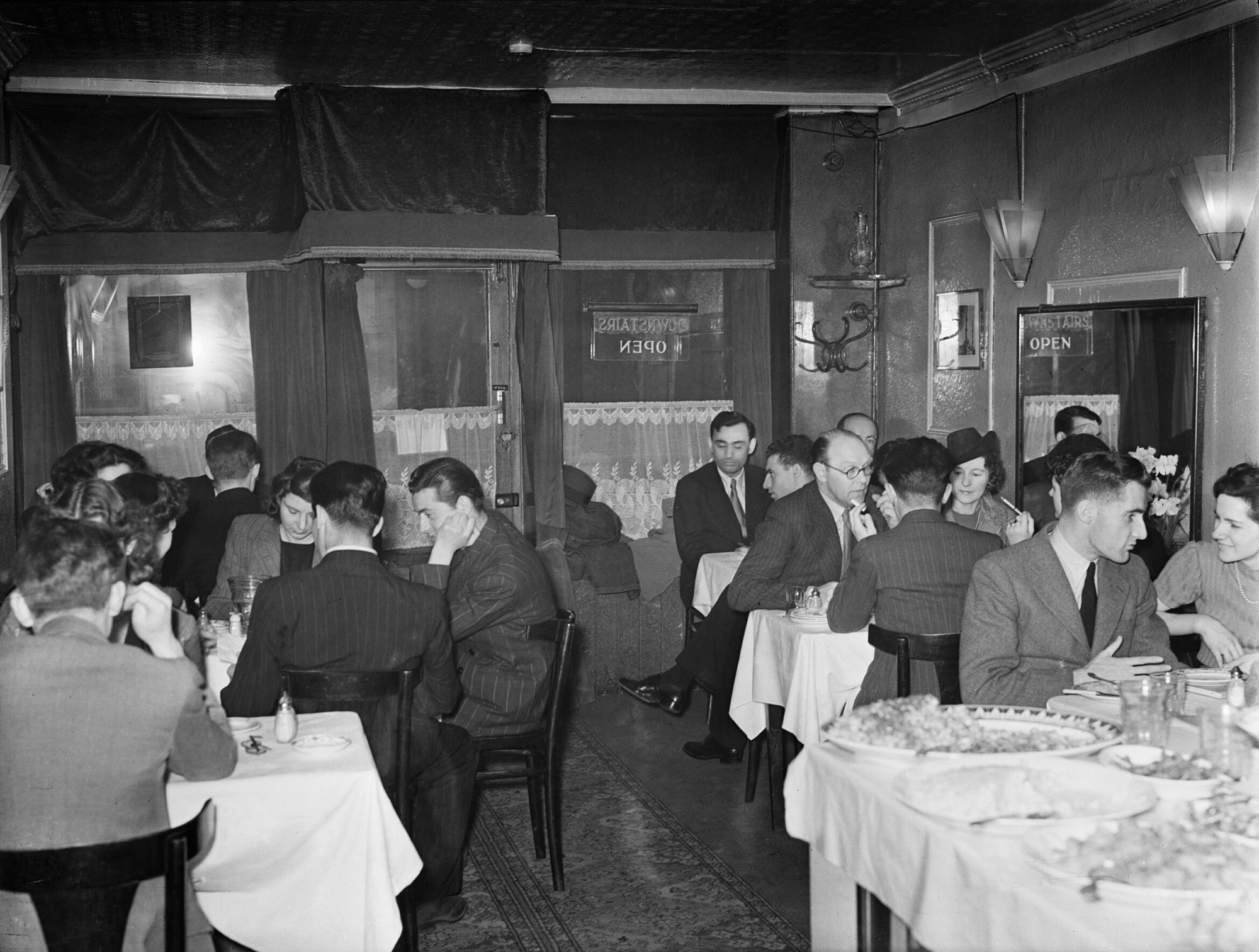
Several things pulled the community westward. Rents in Soho were cheap, the district had a racy reputation, and it already had a history of immigrant communities. Returning soldiers had acquired a taste for Chinese flavours, and Chinese workers shifted from laundries to restaurants. The first Chinese restaurants probably opened in Lisle Street, parallel to Gerrard Street, with the Kowloon Restaurant among the earliest. By the end of the 1950s the Hong Kong Emporium in Rupert Street had made Chinese ingredients widely available.
The people arriving were largely agricultural labourers from Hong Kong, especially villages in the New Territories, where farming was collapsing. According to Londonist, shipping and laundries were in steep decline, so the newcomers went into catering. Prospect adds that, unlike other Commonwealth workers, Hong Kong Chinese were never recruited into particular industries, and catering was unattractive to locals, so the newcomers met little resentment.
Londonist gives the timeline: the Association of Chinese Restaurateurs was set up in 1961, the Zhongshan Workers' Club followed a couple of years later with Chinese films and classes, and the first Chinese New Year celebrations took place on Gerrard Street. By the end of the 1960s restaurants and shops had spread across Gerrard Street, Lisle Street and Little Newport Street, with around a hundred businesses. Sources differ on exactly when Gerrard Street took over, some leaning to the 1970s, so the safe summary is the late 1950s through the 1960s.
Making it official
Westminster City Council formally recognised the area as Chinatown in 1985, according to the official Chinatown site. A council document from 2003 records that in the mid-1980s it pedestrianised Gerrard Street and parts of Newport Place, and put in Chinese gates, a pagoda and street furniture. Red lighting columns and specially designed phone boxes completed the look.
The gates
The original arches on Gerrard Street date from 1985 and 1986, built in the paifang style with red pillars, calligraphy and tiled roofs. A further arch on Macclesfield Street came in the 1990s. Look up as you walk through: the Hong Kong Government sponsored the sculpture of the Chinese characters on the gateways, and the couplets were composed by B. Tran Huynh.
The fourth gate stands on Wardour Street and is the grand one. Lookup London says it was hand-crafted in Beijing and shipped over for the UK China Year of Exchange. The foundation stone was laid on 9 July 2015, the position was set by feng shui, and it was unveiled in 2016. London x London calls it the UK's largest Chinese gate. It is larger, and structurally different from the smaller Westernised Gerrard Street designs.
The lions
On Gerrard Street, a plaque records that the Duke of Gloucester unveiled two Chinese lions on 29 October 1985, in Westminster's quatercentenary year, as the formal opening of Gerrard Street China Town. The lions are recorded as generously donated by the People's Republic of China, and the plaque itself was presented by China Travel Services (HK) Ltd. Guests included the Lord Mayor of Westminster, Roger Bramble. A second plaque between the lions records that the Prince of Wales unveiled it on 7 February 2000 during a royal visit for the Year of the Dragon Millennium.
In Chinese mythology, lions protect buildings and bring good luck. Red stands for good fortune, and lanterns once hung only for Chinese New Year are now up all year.
How to see it
- Go at opening or in the early evening: the lanterns are lit and the street is easiest to walk. Start on Wardour Street at the big gate, then walk down Gerrard Street to the lions.
- Look for the plaques: the lion plaques are on Gerrard Street, and the Burke plaque is at 37.
- Look at the road signs: they have carried English and Cantonese since the 1970s.
Chinatown's footprint has no official size, but it usually takes in Gerrard Street, the lower half of Wardour Street, Lisle Street, Macclesfield Street, Newport Place and Little Newport Street. Walk it with Limehouse in mind.