Soho Square: the lawn at lunchtime, and 350 years of history
Laid out in the 1680s as King Square, given a statue that left for Harrow Weald and came back, and home to a hut that is really a tool shed: Soho Square, and where to eat on the lawn.
By Only Soho Editorial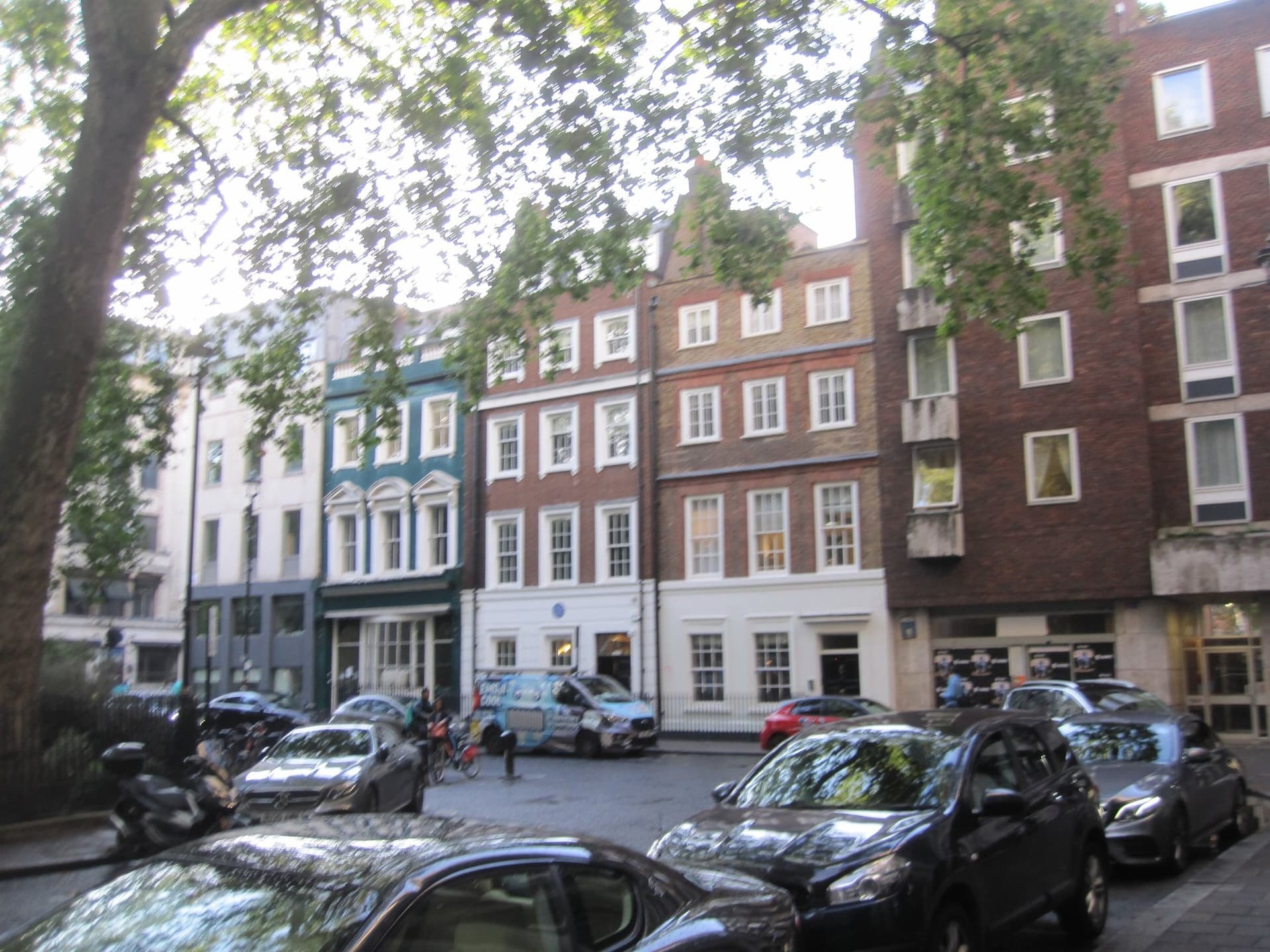
Soho Square is Soho's back garden. On a dry weekday at one o'clock the lawn is covered in office workers with lunch on their knees, and by six it is the place to meet before a night out. Most of them have no idea that the hut in the middle is a Victorian tool shed, or that the king on the plinth spent sixty years in someone else's garden. Here is the story, and where to get lunch to eat on the grass.
King Square
The square was laid out on Soho Fields after 6 April 1677, when the brewer Joseph Girle leased the land to Richard Frith, a bricklayer. The Survey of London finds that the first leases called it Frith's Square, but the ratebook of 1683 named it King Square, in honour of Charles II, and the ratebooks kept that name until the early 1800s even though maps had been calling it Soho Square since at least 1746. Building was fast: fourteen houses were lived in by 1683, twenty-three by 1685 and forty-one by 1691, including the Duke of Monmouth's great house on the south side. Monmouth, the eldest illegitimate son of Charles II, is said to have used "Soho" as the rallying call for his men at the Battle of Sedgemoor in 1685.
The statue that went away
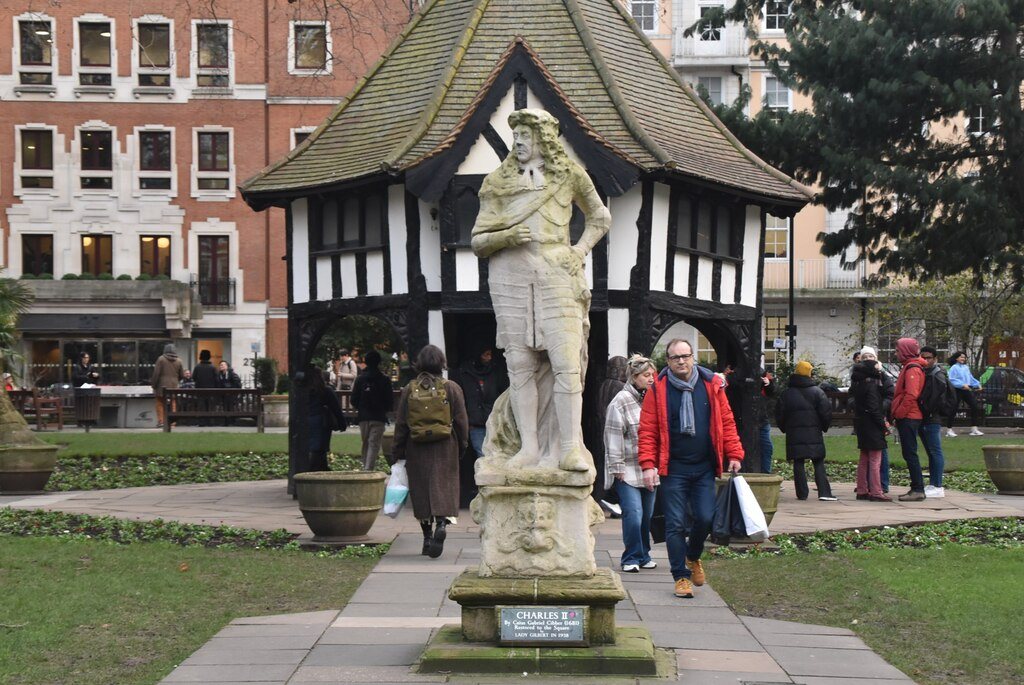
In the middle stood a statue of Charles II carved by Caius Gabriel Cibber in 1681, raised over a fountain, with figures of the Thames, Severn, Tyne and Humber around the pedestal. In 1720 John Strype found "a very large and open Place", neatly kept, with walks and grass plots. Not everyone was impressed: in 1734 one critic called it "a little, contemptible garden" with "a worse statue". By 1803 the fountain had run dry, and a few years later the statue was described as badly damaged.
In 1875 and 1876 the square was relaid with new railings and flower beds, and the statue was taken away to the grounds of the painter Frederick Goodall at Harrow Weald. As the Survey's chapter on the garden records, it came back to the square in February 1938, though not to the centre, which is why Charles II now stands a little to one side.
The hut
What replaced the king in the middle is the half-timbered structure everyone photographs. It looks Tudor. It was built in 1875 and 1876 and is, in the Survey's words, part tool shed, part arbour. Even after the relaying, the garden stayed closed to the public; an offer of £5,000 in 1893 to open it to the public got nowhere. The railings and gates you walk through today went up in 1959, paid for with help from Westminster City Council.
The two churches
On the square is the French Protestant Church, built in 1891 to 1893 on the site of numbers 8 and 9. Its congregation traces itself back to the first Protestant refugees to settle in London, and a carved panel over the door tells the story. Nearby is St Patrick's, a Roman Catholic church that began as a chapel in an old assembly room, consecrated on 29 September 1792. The present building was first used on St Patrick's Day, 17 March 1893. Step inside either one for five minutes of quiet in the middle of the noise.
Lunch for the lawn
Bring lunch in. Our picks are all a few minutes away. Hoppers, at 49 Frith Street, runs a Lunch Plate menu from noon, and its kothu travels well. Order a lunch plate to take out and eat it on the bench by the statue.
If you want a seat instead, Barrafina on Dean Street opens at noon and takes no bookings, so the trick is to be there at five to twelve. Take a seat as soon as one comes up and order the ham croquetas and a tortilla.
And for the evening, Milroy's sits at the Soho Square end of Greek Street, at number 3. Order a dram from its own bottlings and toast the king who came back.
When to go
Weekday lunchtimes for the full Soho picnic, early evening in summer for the light on the west side, and a Sunday morning if you want to read the history in peace. Look for the statue first, then the hut, then the two churches, and you have done the square properly.