A Soho history walk: Mozart, Marx, Blake and the pump that stopped the cholera
One hour, a dozen addresses: where Mozart lodged at nine, where Marx wrote in poverty, where Blake was born, where television was first shown and where a doctor took the handle off a pump.
By Only Soho Editorial
Soho's history is written on its walls, if you know where to look. This walk takes about an hour, covers a dozen addresses and finishes at a pub. Start at the south, on Gerrard Street, and work north and west. Wear comfortable shoes and look up.
1. 39 Gerrard Street: Ronnie Scott
Begin in Chinatown. In the basement of 39 Gerrard Street, Ronnie Scott ran his jazz club from 1959 until it moved to Frith Street in 1965, and English Heritage put up a blue plaque in 2019. Walk north across Shaftesbury Avenue to Frith Street.
2. 22 Frith Street: the first television
On 26 January 1926 the Scottish inventor John Logie Baird gave a public demonstration of television at 22 Frith Street. Since 1949 the ground floor has been Bar Italia, and for the centenary in January 2026 a new plaque went up. Stand at the counter and order an espresso before you carry on.
3. 20 and 18 Frith Street: Mozart and Romilly
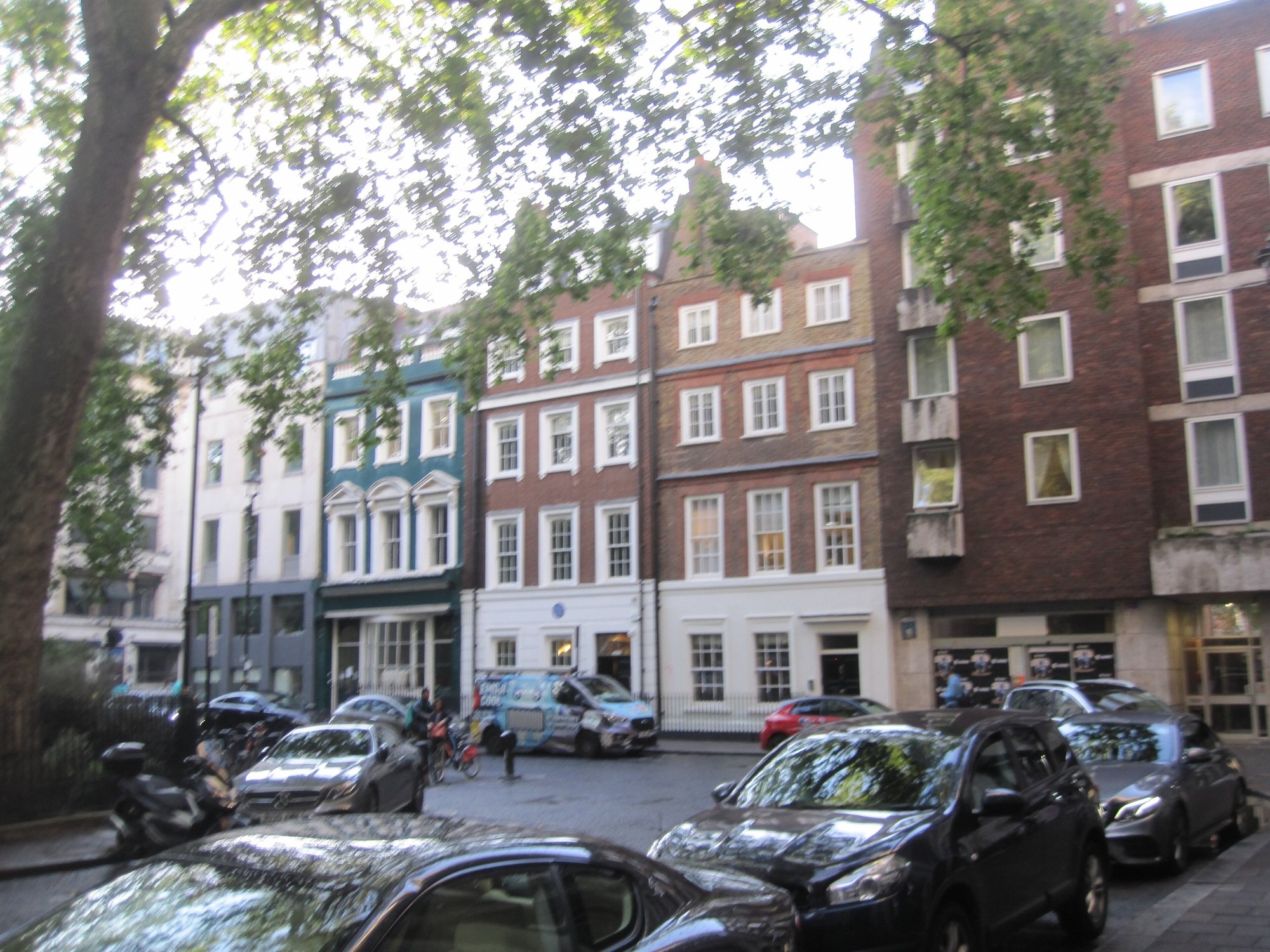
A few doors along, at number 20, the young Mozart, aged about nine, lodged with his father and sister in 1764 and 1765, in the house of a staymaker called Thomas Williamson. In January 1765 he dedicated his Opus 3 to Queen Charlotte from this address. The house itself has been demolished. At number 18, the law reformer Sir Samuel Romilly was born in 1757. Both facts are in the Survey of London's chapter on Frith Street, which is worth reading on your phone as you go.
4. 6 Frith Street: Hazlitt
Further up, at number 6, the essayist William Hazlitt took lodgings early in 1830 and died here on 18 September that year. His last words, the Survey records, were "Well, I've had a happy life". The house is now Hazlitt's hotel.
5. Soho Square
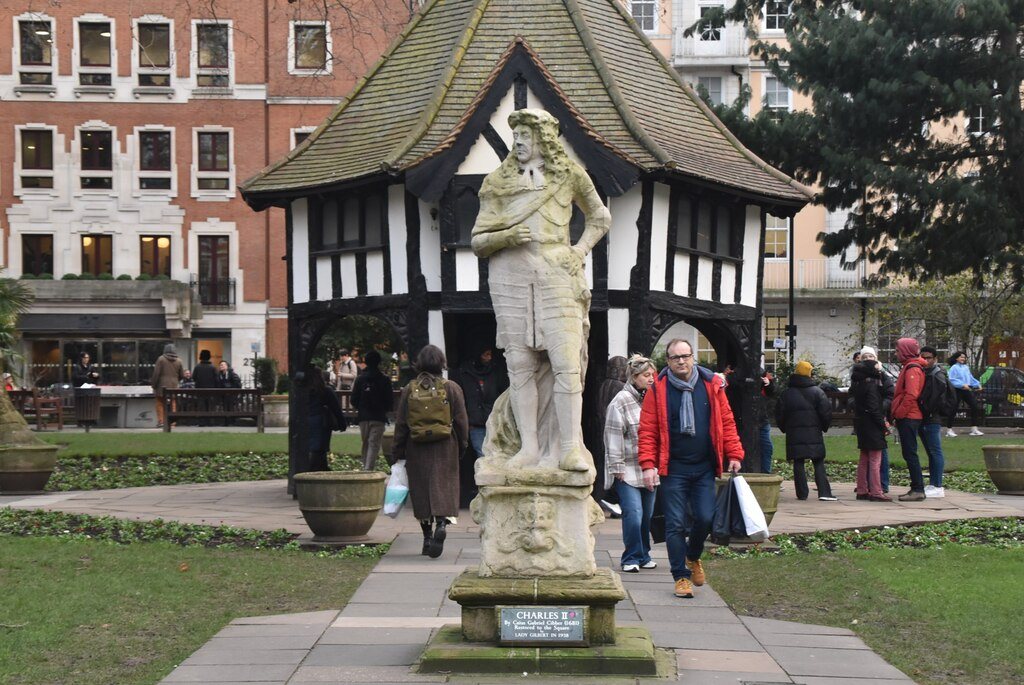
At the top of Frith Street is Soho Square. Find the statue of Charles II, carved by Caius Gabriel Cibber in 1681, which spent the years from the 1870s to 1938 in a garden at Harrow Weald before coming home. The half-timbered hut in the middle dates from 1875 and 1876 and is really a tool shed and arbour.
6. Greek Street: Wedgwood's showroom
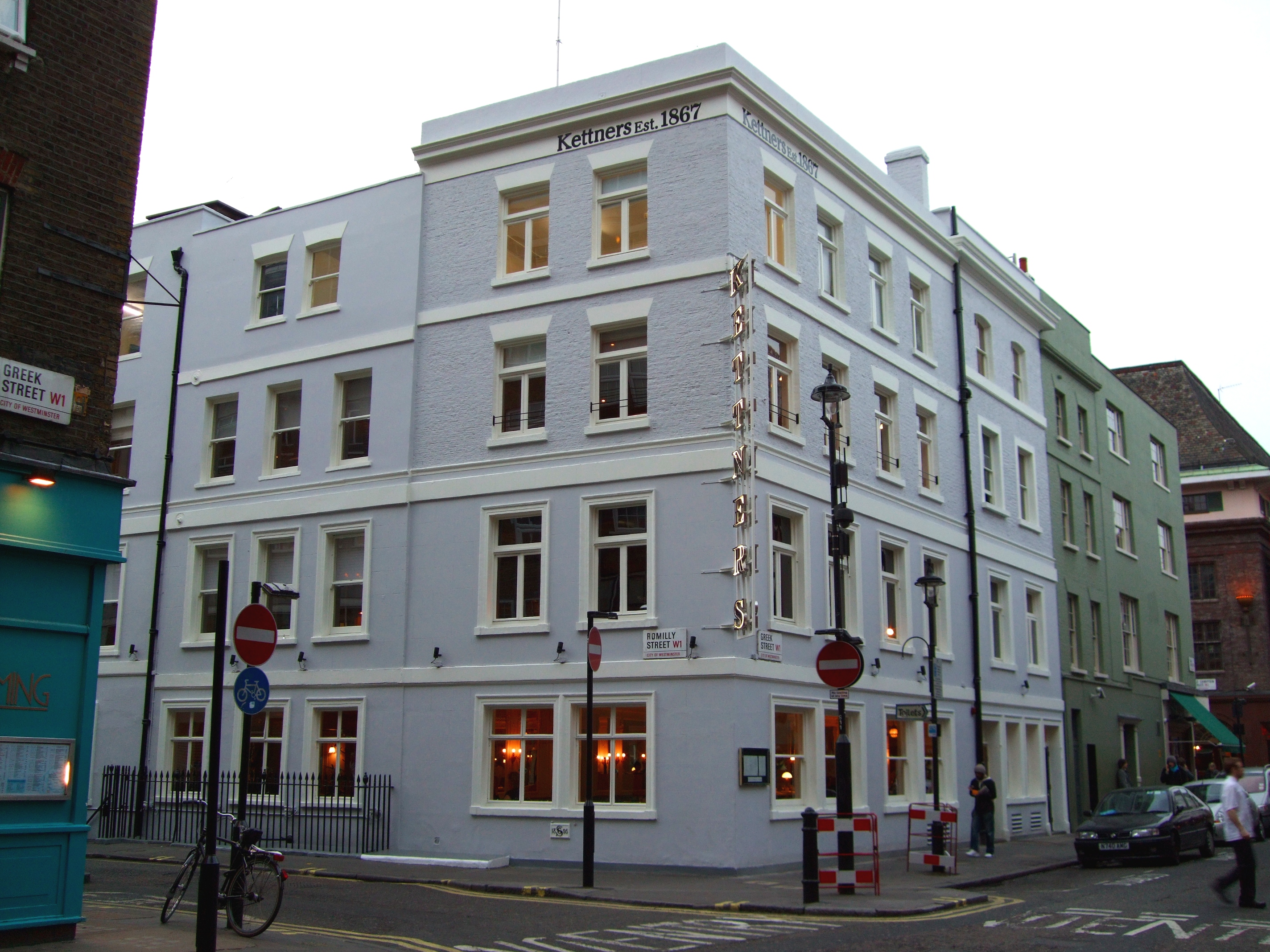
Cut across to the top of Greek Street. In 1774 the potter Josiah Wedgwood took numbers 12 and 13 as his London showroom, and put the huge dinner service he had made for Catherine the Great, Empress of Russia, on display across five rooms. It was the sight of the season for fashionable London.
7. 28 Dean Street: Karl Marx
Back through the square and down Dean Street to number 28, where a blue plaque records that Karl Marx lived here from 1851 to 1856. As English Heritage tells it, the family lived in real poverty, two of the children died here, and Marx worked on the first volume of Das Kapital. Today the ground floor is Quo Vadis, where the private dining room is called the Marx Room. If it is lunchtime, book a table and order the Soho Set Menu.
8. Broadwick Street: John Snow's pump
Head west across Wardour Street and Berwick Street to Broadwick Street, which used to be Broad Street. In 1854 a cholera outbreak here killed around 700 people. The physician John Snow traced it to the public pump that stood outside what is now 41 Broadwick Street, and the handle was chained up. A replica pump with a plaque was put up nearby in 1992, and a pink granite kerbstone marks where the original stood, near the John Snow pub at number 39.
9. Broadwick Street and Marshall Street: William Blake
At the western end of the street, on the corner with Marshall Street, is where William Blake was born on 28 November 1757, at what was then 28 Broad Street and is now number 74. He spent most of his childhood here, and in 1784 set up as a print seller next door.
10. Berwick Street: the album cover
Finish by walking back east to Berwick Street, where the cover of Oasis's (What's the Story) Morning Glory was shot, two men passing in the middle of the street. Then go into The Duck and Rice, the pub and Chinese kitchen on Berwick Street, take a seat downstairs and order a tank Pilsner Urquell. You have earned it.